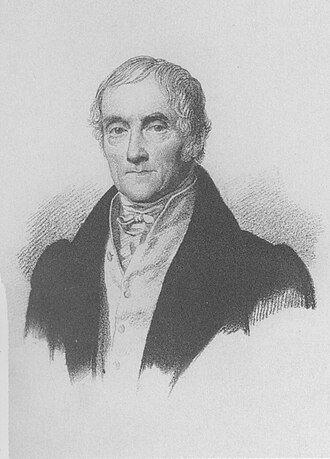
Wilhelm Traugott Krug
1770–1842 · German philosopher and writer of the Kantian school of logic
Wilhelm Traugott Krug (1770-1842) was a German philosopher and writer, usually counted among the Kantian school of logic. He worked in the transitional period between Kant and the idealism of Fichte, Schelling and Hegel, and his importance lies largely in the debate he conducted with them.
Born in 1770 near Wittenberg into a farming family, he studied at Wittenberg, Jena and Göttingen. After serving as an adjunct professor at Wittenberg, he taught philosophy at Frankfurt (Oder) from 1801 to 1804. He then succeeded Immanuel Kant in the chair of logic and metaphysics at Königsberg, and from 1809 until his death he taught philosophy at Leipzig. He also fought in the War of Liberation (1813-14) as a captain of mounted chasseurs.
His method was psychological: he tried to explain the ego by examining how it reflects on the facts of consciousness. Being is known to us only through its presentation in consciousness, yet both being and consciousness are immediately known, along with the relation between them. Through what he called transcendental synthesis, he aimed to reconcile realism and idealism. From an empiricist standpoint he challenged the view that particular, perceptible things could be logically derived from general concepts, and his objections pushed Hegel to respond.
He wrote prolifically on many subjects, including his System of Theoretical and Practical Philosophy and his History of Ancient Philosophy. Though not an original thinker so much as a popularizer, his work encouraged freedom of thought in religion and politics, and he firmly supported Jewish emancipation.
Key ideas
- Psychological method: reflection on the facts of consciousness is the route to understanding the ego.
- Transcendental synthesis: being and consciousness are known immediately, together with their relation, so realism and idealism can be reconciled.
- Empiricism against idealism: singular, perceptible things cannot be deduced logically from general concepts.
- Popularization and freedom of thought: philosophy should reach an educated public, and his work defended freedom in religion and politics.
Curiosities
Kant's successor
The Königsberg philosophy faculty chose him to fill the chair of logic and metaphysics that Kant had held.
A link to Kleist
In 1804 he married Wilhelmine von Zenge, who had previously been engaged to the dramatist Heinrich von Kleist.
Teachers and influences
Teachers
- Franz Volkmar Reinhard 1753–1812
Original Filopedia text based on Wikipedia (es) and Wikipedia (en) and Wikidata.