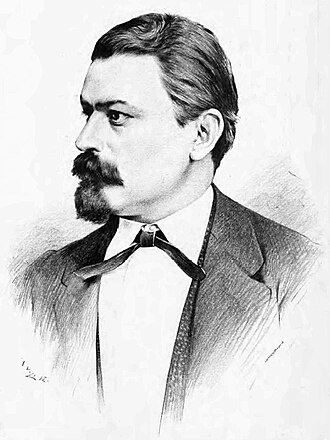
Vítězslav Hálek
1835–1874 · Czech poet, writer, journalist and dramatist
Vítězslav Hálek (1835–1874) was a Czech poet, writer, journalist and dramatist who worked in Bohemia under the Austrian Empire. He is counted among the leading figures of the Czech May School, alongside Jan Neruda, and his significance lies in making love poetry and plain, accessible prose a popular part of Czech literature.
After finishing gymnasium in Prague, he turned away from seminary training and left his philosophy studies unfinished, choosing instead to write. He supported himself as a tutor in a wealthy household, where he met Dorotea Horáčková, who inspired his love poems. From 1861 he worked as an editor at Národní listy and helped produce papers and magazines such as Lumír and Květy, and he also founded Zlatá Praha. He wrote theatre criticism and several plays, which met with little success. He died of pneumonia in Prague in 1874, aged thirty-nine.
His optimistic, relaxed and easy-to-read style brought him wide popularity during his lifetime, though after his death critics faulted his work for lacking depth. His name remains tied to Večerní písně, a collection of love poems from 1859. Later critics have praised the lasting relevance of his themes, and he is now ranked among the leading poets in Czech literary history.
Key works
- Alfréd (1858), a lyrical-epic work that first drew public attention to him.
- Večerní písně (Evening Songs, 1859), his most famous collection of love poems.
- V přírodě (In Nature, 1872), a contemplative work rooted in the countryside.
- Pohádky z naší vesnice (Fairy Tales from Our Village, 1874), tales drawing on folk material, published shortly before his death.
Curiosities
A fatal walk
In 1874 he caught a chill on a walking trip to the Mumlava Waterfall, and the illness developed into the pneumonia that killed him.
From story to film
His short story Muzikantská Liduška, published in 1861, was the basis for the 1940 film of the same name.
Original Filopedia text based on Wikipedia (es) and Wikipedia (en) and Wikidata.