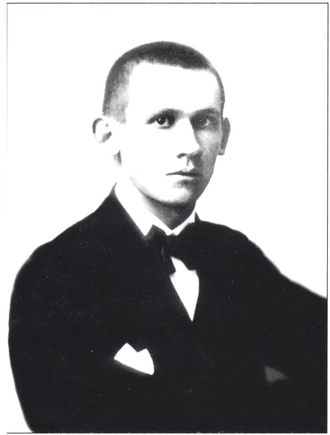
Valentin Asmus
1894–1975 · unorthodox Soviet Marxist philosopher and scholar of Kant and the history of philosophy
Valentin Ferdinandovich Asmus (1894–1975) was a Ukrainian-born philosopher who, in the early Soviet years, belonged to a small circle that kept the classical European philosophical tradition alive. He is usually described as an independent thinker and an unorthodox Marxist, with his main interests in the history of philosophy and aesthetics.
He graduated in philosophy from Kiev University in 1919 and moved to Moscow in 1927. Early on he took issue with William James and, in the mid-1920s, he worked on literary constructivism. Through his wife Irina he became friendly with Boris Pasternak around 1931. His major book, Marx and Bourgeois Historicism (1933), was shaped by the thought of György Lukács. He had once opposed formal logic but later changed his mind and wrote a textbook on it. A well-known story claims that Stalin asked him to lecture Red Army generals on logic. From 1942 to 1972 he taught at Moscow State University.
Outside the Soviet Union he is best known for his work on Immanuel Kant, whose dialectic and logic he examined in several books. His legacy lies partly in showing that serious work in the history of philosophy could survive under difficult conditions.
Key ideas
- Marxist historicism: Asmus read Marx as an heir to classical philosophy rather than as its replacement.
- Kantian dialectic: His study of Kant aimed to expose the tension between formal logic and dialectical reasoning.
- Rehabilitating formal logic: After criticizing it, he defended its value as a tool for rigorous thinking.
- History of philosophy as method: He held that understanding past thinkers was a precondition for thinking rigorously.
Curiosities
Lectures to generals
According to a story, Stalin summoned him to teach logic to Red Army generals. The account is passed down without full documentary confirmation.
Friendship with Pasternak
Through his wife Irina he became a friend of the poet Boris Pasternak around 1931.
Teachers and influences
Pupils
- Teodor Oizerman 1914–2017
Influenced by
- Karl Marx 1818–1883
- Plato 428 BC–348 BC
- Immanuel Kant 1724–1804
Original Filopedia text based on Wikipedia (es) and Wikipedia (en) and Wikidata.