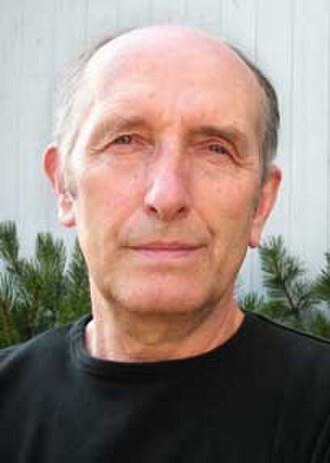
Vaclav Smil
b. 1943 · Czech-Canadian scientist and policy analyst
Vaclav Smil (born 1943 in Plzeň) is a Czech-Canadian scientist and policy analyst whose work has become a reference point for anyone trying to understand energy, food and the environment through long historical perspective and hard numbers. He was born during the Second World War, in what was then the German Protectorate of Bohemia and Moravia. Growing up in a small mountain town, he cut wood almost every day to heat the family home, an early lesson, as he later put it, in how much effort energy really takes.
He studied at the Faculty of Natural Sciences of Charles University in Prague, where he attended lectures for much of the week over several years, and later earned a PhD in geography from Pennsylvania State University in 1971. After the Soviet invasion of Czechoslovakia he emigrated to the United States in 1969 and soon moved to Canada. In 1972 he took a post at the University of Manitoba, where he stayed for decades, teaching courses on environmental science, energy, population and China.
His research ranges across energy, food, population, economics and the history of technology, with a particular focus on China. Smil's books rely on data and careful comparison to test optimistic forecasts and technological fashions. He argues that the shift to clean energy will take much longer than many expect, and he holds that continued economic growth cannot be sustained if measured in materials and energy use.
His reputation extends well beyond academia. In 2010 Foreign Policy magazine placed him on its list of top global thinkers, in 2013 he was appointed to the Order of Canada, and in 2000 he received the American Association for the Advancement of Science award for public understanding of science and technology. Bill Gates counts among his admirers.
His legacy lies largely in popularising a way of thinking about the world grounded in physical quantities. His books are read in universities and in energy policy debates, and his insistence on measuring before predicting has shaped those who seek sober analysis of major environmental problems.
Key works
- The Earth's Biosphere: Evolution, Dynamics and Change (2002): a tour of the biosphere as an evolving system, with its cycles and transformations.
- Energy in World History (1994): an overview of how energy sources have shaped human development.
- Numbers Don't Lie: 71 Things You Need To Know About The World (2020): key facts about the modern world, presented through commented figures.
- Made in the USA: The Rise and Retreat of American Manufacturing (2013): an analysis of the rise and decline of American manufacturing.
Curiosities
Chopping wood for the winter
As a boy in a small mountain town he cut wood almost daily to heat the family home. He has said the experience taught him early how much effort it takes to obtain energy.
A tireless reader
According to various sources he reads between 60 and 110 non-technical books a year and has kept a list of every book he has read since 1969. He has also said he does not intend ever to own a cell phone.
A famous admirer
Microsoft co-founder Bill Gates has said he waits for new Smil books the way some people wait for the next Star Wars film.
Original Filopedia text based on Wikipedia (es) and Wikipedia (en) and Wikidata.