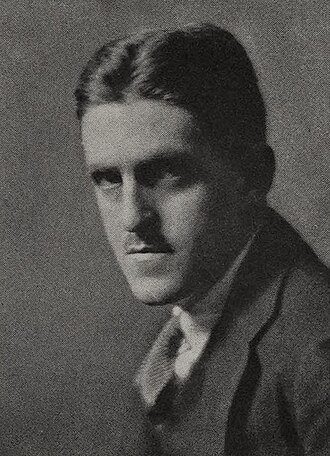
Sidney Howard
1891–1939 · American playwright and screenwriter
Sidney Howard (Oakland, 1891 - Tyringham, 1939) was an American playwright and screenwriter who worked first on Broadway and later in Hollywood. His career spans the 1920s and 1930s, when the American commercial theatre was looking for new subjects, and he is remembered for character-driven domestic dramas about unconventional people.
He studied at the University of California, Berkeley, and then in George Pierce Baker's playwriting class at Harvard. During the First World War he served as a volunteer in France and the Balkans. Afterwards he translated works from French, Spanish, Hungarian and German, and wrote about labor issues. His first Broadway play, Swords (1921), failed, but the realistic drama They Knew What They Wanted (1924) made his name and won the Pulitzer Prize in 1925. His output was uneven, with hits and flops alternating, but he compensated with a remarkably large body of work.
The Silver Cord (1926) brought him one of his biggest successes, the story of a mother who clings to her sons and undermines their romances. He co-founded the Playwrights' Company with Maxwell Anderson, Elmer Rice and Robert Sherwood, and eventually wrote or adapted more than seventy plays. His marriage to the actress Clare Eames ended in separation in 1927, and the bitterness of that experience shaped his satire Half Gods (1929). After Eames died he married Polly Damrosch.
In Hollywood he worked for Samuel Goldwyn and at MGM, and received Academy Award nominations for Arrowsmith and Dodsworth. He won the Academy Award for Best Adapted Screenplay for Gone with the Wind after his death. He died in 1939, aged 48, on his farm in Tyringham, crushed by his tractor. His legacy includes the Sidney Howard Memorial Award, given to promising young playwrights who had not yet achieved notable success.
Key works
- They Knew What They Wanted (1924): a realistic drama about an Italian vineyard owner, a marriage by correspondence and forgiveness after adultery, which made Howard's reputation.
- The Silver Cord (1926): a portrait of a possessive mother who tries to wreck her sons' relationships, one of his major hits.
- Half Gods (1929): a bitter satire of modern marriage, written after Howard's separation from Clare Eames.
- Yellow Jack (1934): a historical drama about the fight against yellow fever, praised for its purpose and innovative staging.
Curiosities
An end in the garage
He died in 1939 on his Tyringham farm, pinned against the garage wall by his two-and-a-half-ton tractor. According to the contemporary account, he had switched on the ignition and was starting the engine when the vehicle lurched forward.
The first posthumous Oscar
His Academy Award for the screenplay of Gone with the Wind was the first ever won by a nominee who had already died.
An award in his name
Soon after his death, colleagues in the Playwrights' Company created the Sidney Howard Memorial Award in his honor. Tennessee Williams received it in 1945.
Original Filopedia text based on Wikipedia (es) and Wikipedia (en) and Wikidata.