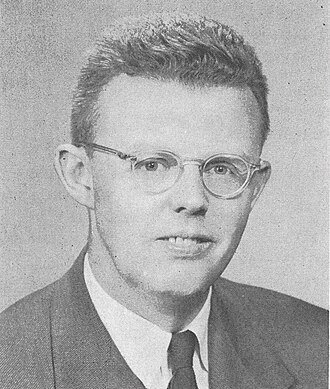
Roderick Chisholm
1916–1999 · American philosopher of epistemology and metaphysics
Roderick Chisholm (Seekonk, Massachusetts, 1916 – Providence, Rhode Island, 1999) is widely regarded as one of the most creative and influential American philosophers of the twentieth century. Working within the analytic tradition, he kept a deep interest in the history of philosophy, especially in Brentano, Russell and Moore. He earned his doctorate at Harvard and spent his whole academic career at Brown University.
His first major work was Perceiving (1957), and his epistemology was gathered in Theory of Knowledge, a textbook that appeared in three quite different editions. His masterwork, Person and Object (1976), takes its title in deliberate contrast with Quine's Word and Object. Against Quine's anti-realism, behaviourism and relativism, Chisholm defended a form of metaphysical Platonism and the possibility of empirical knowledge grounded in a priori epistemic principles.
His theory of knowledge is foundationalist: justified beliefs are either directly evident or supported by chains of justified beliefs that end in such evident ones. He also defended libertarianism about free will, the view that free will is incompatible with determinism while we nonetheless act freely, along with an agent-causation account of volition close to Thomas Reid's. His influence reached students such as Ernest Sosa, Keith Lehrer and Fred Feldman.
Key ideas
- Epistemic foundationalism: justified beliefs are either directly evident or rest on chains of justified beliefs that end in such evident ones.
- Libertarianism: free will is incompatible with determinism, and we do act freely.
- Agent causation: volition is explained by an agent acting, not merely by a chain of events.
- Self-attribution: first-person thought consists in attributing properties to oneself, and the things we believe are properties.
- Mereological essentialism: everyday objects cease to exist when they lose a part, whereas persons persist through such changes.
Original Filopedia text based on Wikipedia (es) and Wikipedia (en) and Wikidata.