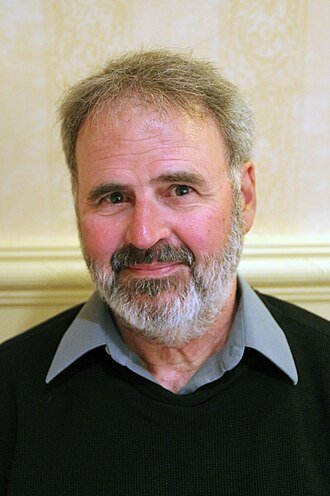
Robert Todd Carroll
1945–2016 · American author, philosophy professor and creator of The Skeptic's Dictionary
Robert Todd Carroll (Joliet, Illinois, 1945 – Davis, California, 2016) was an American philosopher, writer and academic, best known for The Skeptic's Dictionary, an online reference devoted to scientific skepticism and critical thinking. Working within analytic philosophy and a naturalist outlook, he became a prominent voice against pseudoscience and paranormal claims.
Carroll grew up in San Diego, studied briefly for the priesthood at Notre Dame, and earned his PhD in philosophy in 1974 at the University of California, San Diego. His dissertation, supervised by Richard Popkin, examined the religious philosophy of Edward Stillingfleet and appeared in print in 1975. He taught philosophy at Sacramento City College until retiring in 2007.
In 1994 he launched The Skeptic's Dictionary on the Internet with about fifty articles, mostly on logical fallacies and pseudoscience. The site grew to hundreds of entries, translated into more than a dozen languages. Carroll described himself as an atheist and materialist, and he argued that religious claims deserve the same demand for evidence as any other. His legacy lies in popularising critical thinking and skepticism online.
Key ideas
- Critical thinking: claims should be tested, and without evidence the reasonable course is to withhold belief.
- Logical fallacies: the habitual reasoning errors that prop up strange or pseudoscientific beliefs.
- Naturalism and materialism: explanations should be sought in natural causes rather than in the supernatural.
- Skepticism as a way of life: doubting what is unproven is a healthy approach to living, not merely an academic method.
Curiosities
From Catholicism to skepticism
Carroll began doubting Catholicism during his time in the Notre Dame seminary. After leaving, he became interested in Eastern religions and attended meetings of Paramahansa Yogananda's Self-Realization Fellowship.
A dictionary inspired by Bayle
Carroll said The Skeptic's Dictionary took its name and its openly biased stance from Pierre Bayle's Historical and Critical Dictionary.
Original Filopedia text based on Wikipedia (es) and Wikipedia (en) and Wikidata.