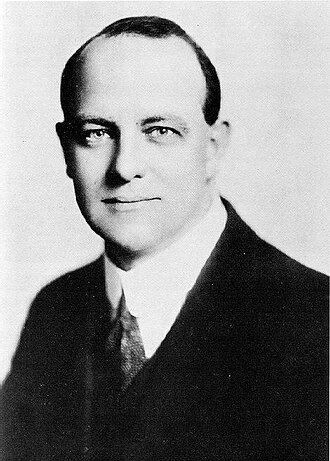
P. G. Wodehouse
1881–1975 · British novelist and humorist
P. G. Wodehouse (Guildford, 1881 – Southampton, New York, 1975) was a British humorist whose light comic novels made him one of the most widely read writers of the twentieth century. He wrote in English, and his name is most closely tied to the polished, playful comic novel, although his career also took in musical theatre, films and journalism. Much of his fiction is set in his native Britain, yet he spent most of his adult life in the United States.
He was born in Guildford, the third son of a British magistrate posted to Hong Kong. His parents spent long periods away from their children, and he was brought up largely by nurses and by a large number of aunts and uncles. That absence, which he treated with good humour, recurs in his novels, where formidable aunts and distant fathers are almost a fixture. He was happy at Dulwich College and stayed attached to it for the rest of his life. When school ended, family money troubles prevented him from following his brother to Oxford, and he took a job at a London bank that bored him. In his spare time he wrote sports pieces and comic sketches for newspapers and magazines.
His writing career took off with school stories and a humorous column for The Globe. In 1909 the sale of two short stories to American magazines persuaded him to settle in New York, though he kept writing for British readers. His novels blend comedy with a satirical view of a changing Edwardian society. His prose, with its long and carefully built sentences, borrows period slang, quotations and literary allusions, and his plots tend to tangle young idlers in absurd predicaments. He created series around characters such as Psmith, Lord Emsworth and Ukridge, but the most famous is the one about Bertie Wooster and his valet Jeeves, begun in 1919. As a lyricist he worked with Jerome Kern, Cole Porter and George Gershwin on stage musicals that helped shape the American musical.
In 1934 he moved to France for tax reasons. When the Second World War broke out he stayed at Le Touquet, where German authorities interned him. After his release he recorded five comic, apolitical radio talks in Berlin for American audiences, and their broadcast on enemy radio brought a storm of anger and accusations of collaboration in Britain. He never returned to England. He lived in the United States from 1947 and became an American citizen in 1955. His reputation suffered for years, but writers such as Evelyn Waugh and George Orwell defended him, and his books are still read long after their first appearance.
Key works
- Love Among the Chickens (1906), the first appearance of Ukridge and one of his early comic novels.
- The Man with Two Left Feet (1917), a story collection in which Jeeves and Bertie Wooster first appear.
- The Inimitable Jeeves (1923), a collection that established the series about the valet and his employer.
- Very Good, Jeeves (1930), one of the most admired entries in the series, featuring the schemes of Aunt Agatha.
Books to read
- The Man Upstairs and Other Stories EnglishGutenberg
- The Girl on the Boat EnglishGutenberg
- Right Ho, Jeeves EnglishGutenberg
- My man Jeeves EnglishGutenberg
- The Inimitable Jeeves EnglishGutenberg
- Carry On, Jeeves EnglishGutenberg
- Mike EnglishGutenberg
- Leave it to Psmith EnglishGutenberg
- Something New EnglishGutenberg
- The Man with Two Left Feet, and Other Stories EnglishGutenberg
- Piccadilly Jim EnglishGutenberg
Curiosities
An aunt as model
Wodehouse acknowledged that the formidable Aunt Agatha of his novels was based on his aunt Mary Bathurst Deane, whom he described as the scourge of his childhood.
Knighted shortly before his death
He was awarded a knighthood of the Order of the British Empire one month before he died in 1975, while living in the United States.
Teachers and influences
Influenced
- Terry Pratchett 1948–2015
- Michael Moorcock b. 1939
Original Filopedia text based on Wikipedia (es) and Wikipedia (en) and Wikidata.