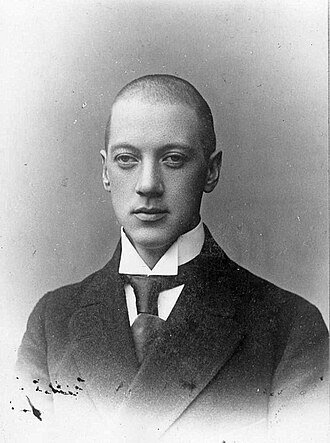
Nikolay Gumilev
1886–1921 · Russian poet, co-founder of Acmeism
Nikolai Gumilev (1886-1921) was a Russian poet, literary critic, traveler and army officer. Writing in Russian at the turn of the twentieth century, he co-founded the Acmeist movement with Sergei Gorodetsky. His importance lies in his insistence that poetry should be a craft of clear images and precise language, a reaction against the vagueness of Russian Symbolism.
Born in Kronstadt, he studied at the gymnasium in Tsarskoye Selo, where the Symbolist poet Innokenty Annensky taught him and, by his own account, turned him toward writing poetry. His early books, such as The Way of the Conquistadors (1905), gathered exotic subjects, and while critics found their technique careless, he was pleased with them. From 1907 he travelled widely in Europe and became deeply drawn to Africa, bringing back material for his verse and a large collection of objects for the museum of anthropology and ethnography in St Petersburg.
In 1911 he and Gorodetsky founded the Guild of Poets, where Acmeism took shape. He had married Anna Akhmatova in 1910, and the marriage lasted eight years. During the First World War he served in a cavalry corps and received two St George crosses; from those years comes The Quiver (1916), among the most admired of his collections. His verse play Gondla (1917), partly autobiographical in character, was staged in 1920.
After the revolution he made no secret of his anti-communist views. In August 1921 the Cheka arrested him on charges of taking part in a monarchist conspiracy that, as far as is now known, did not exist, and he was shot along with other people accused in the case. His poetry was banned in the Soviet Union, though it continued to circulate in secret. His legacy endures in Russian poetry and in his son, the historian Lev Gumilev.
Key works
- The Way of the Conquistadors (1905): his first collection, covering subjects from giraffes at Lake Chad to Caracalla's crocodiles.
- Romantic Flowers (1908): a collection inspired by his African adventures and his taste for the exotic.
- Alien Sky (1912): one of the books with which he promoted the principles of Acmeism.
- The Quiver (1916): a volume from his war years, regarded by critics as one of his finest.
- Gondla (1917): a verse drama set in medieval Iceland, where pagan belief clashes with Christianity.
Curiosities
A childhood nickname
As a boy he was nicknamed "Montigomo", meaning Hawk's Claw. The nickname fits the youthful, adventurous image that runs through his verse.
A corrected date
For a long time it was believed that he died on 25 August 1921. The actual date of his execution in the Kovalevsky Forest was established only in 2014.
A line quoted by Mandelstam
In February 1934, walking along a Moscow street, Osip Mandelstam quoted to Akhmatova a line from *Gondla*: "I am ready to die". She later repeated it in her *Poem Without a Hero*.
Original Filopedia text based on Wikipedia (es) and Wikipedia (en) and Wikidata.