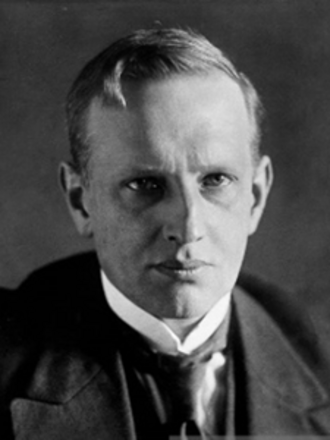
Nicolai Hartmann
1882–1950 · German philosopher of Baltic origin, key representative of critical realism and twentieth-century ontology
Nicolai Hartmann (Riga, 1882 – Göttingen, 1950) was a philosopher of Baltic German origin, trained in the neo-Kantian tradition of Marburg and in phenomenology. He is regarded as a leading representative of critical realism and as one of the most important metaphysicians of the twentieth century. His work spans ontology, ethics, the philosophy of nature and aesthetics, and his influence reached later thinkers such as Hans-Georg Gadamer.
Born in Riga, then the capital of the Governorate of Livonia in the Russian Empire, he studied medicine at Tartu and classical philology and philosophy in Saint Petersburg before arriving in Marburg in 1905. There he worked with Hermann Cohen and Paul Natorp and earned his doctorate in 1907 with a thesis on the problem of being in Greek philosophy before Plato. His early books, on Plato, Proclus and the philosophical foundations of biology, already showed his interest in science and the history of thought. After military service during the First World War, he taught in Marburg and then in Cologne, and in 1931 moved to the University of Berlin, where he stayed until 1945. That year he fled to Göttingen, where he taught until his death in 1950.
His central contribution was critical ontology, which distinguishes between modes of being (real and ideal), moments of being (essence and existence) and modalities (possibility, actuality and necessity). In The Structure of the Real World (1942) he set out his theory of levels of reality, from the physical to the spiritual, each governed by categories that recur in higher levels without being reducible to them. In ethics, his Ethics of 1926 developed a material theory of values close to Max Scheler but critical of it: he held that values are independent of goods and that conflicts among them can sometimes be irresolvable. His name is also linked to the idea of the categorial novum, the appearance of new features at higher levels of reality.
His influence extends to the philosophy of science and to the debate on emergence, although his vast body of work was partly forgotten after his death, largely because later philosophy turned towards anti-ontological approaches and because his terminology is difficult.
Key ideas
- Modes of being: the real and the ideal are exclusive ways of being; the real is temporal, individual and perishable, while the ideal is universal and enduring.
- Moments of being: essence and existence are aspects of every entity, though they are not absolutely separate.
- Levels of reality: the world is organized into strata (physical, organic, psychical and spiritual), each with its own categories that recur in the higher levels.
- Categorial novum: higher levels incorporate new elements that cannot be explained by the lower ones alone.
- Moral antinomies: ethical values can conflict with one another, and the choice between them cannot always be fully resolved.
Teachers and influences
Pupils
- Hans-Georg Gadamer 1900–2002
Original Filopedia text based on Wikipedia (es) and Wikipedia (en) and Wikidata.