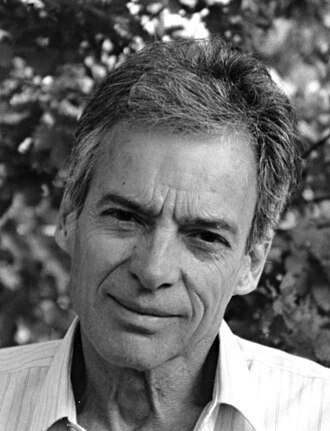
Michel Henry
1922–2002 · French philosopher and novelist, phenomenologist of life
Michel Henry (Haiphong, 1922 - Albi, 2002) was a French philosopher and novelist, one of the most original thinkers in twentieth-century phenomenology. He worked within the phenomenological tradition that begins with Husserl, but took it in a decisive new direction. Rather than studying how things appear in the world, he set out to describe the life that feels and experiences itself from within.
He was born in French Indochina and grew up in France after his father's death. During the Occupation he joined the Resistance in the Haut Jura, and that experience of clandestine life left a deep mark on his thinking. After the war he studied philosophy and completed his main thesis, The Essence of Manifestation, published in 1963. He taught in Morocco, Algeria and Aix-en-Provence, and from 1960 at the University of Montpellier, where he developed his work apart from intellectual fashions. He also wrote novels; L'Amour les yeux fermés won the Renaudot Prize in 1976.
For Henry, classical phenomenology deals with what appears in the world, that is, with exteriority, and overlooks the foundation that makes appearance possible: an invisible life that can only be known through its own self-feeling. This life moves between suffering and joy, and no one sees it from outside. The lived body, felt from within, is central to his reflection. His work has sparked debate among theologians and phenomenologists, and it is still studied at centres such as the one at Saint Joseph University in Beirut.
Key ideas
- Exteriority and interiority: the visible appears in the world, but life reveals itself only in the inner experience each person has of themselves.
- Life as self-affection: life feels itself, and so it is the foundation of all experience, thought included.
- Suffering and joy: these are the two basic affective tones of life, not additions to it.
- Embodied subjectivity: the human being is not a pure spirit but a body lived from within, through which we act in the world.
Curiosities
A code name
In the maquis of the Haut Jura, during the Resistance, he was known by the code name Kant.
An archive in Leuven
Since 2006, his wife has deposited the philosopher's papers at the Catholic University of Leuven, where they form a collection bearing his name.
Teachers and influences
Influenced
- François Laruelle 1937–2024
Original Filopedia text based on Wikipedia (es) and Wikipedia (en) and Wikidata.