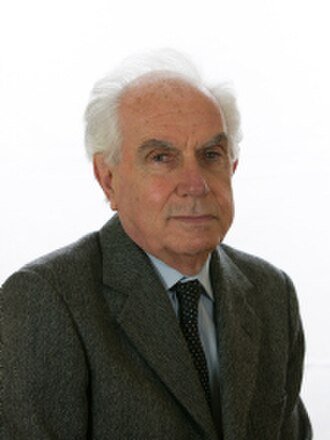
Mario Tronti
1931–2023 · Italian philosopher and politician, key theorist of operaismo
Mario Tronti (Rome, 1931 - Ferentillo, 2023) was an Italian philosopher and politician, one of the main architects of operaismo, the current that in the 1960s laid the groundwork for Italian autonomist Marxism. His thought belongs to the Marxist tradition, but it looks critically at the traditional organisations of the workers' movement.
An active member of the Italian Communist Party in the 1950s, he co-founded the journal Quaderni Rossi with Raniero Panzieri and, in 1963, launched Classe Operaia. Against unions and parties, he argued for direct engagement with workers and their struggles in the factories. Influenced by Galvano Della Volpe, he distanced himself from the reading of Gramsci that prevailed in the PCI. His 1966 book Operai e capitale had a strong impact on the youth movements of the period. After the failure of the protests of 1969, he turned to the autonomy of the political, drawing on Marx and Carl Schmitt, while teaching at the University of Siena. He was elected senator in 1992 and again in 2013. In his later years he developed a pessimistic view of the end of modern politics and a critique of democracy.
Key ideas
- Operaismo: class relations are analysed from the standpoint of workers' practice, not from the organisations that claim to represent them.
- Centrality of the working class: political action should arise from the subjectivity and struggles of workers rather than from abstract theory.
- Autonomy of the political: politics has its own logic that cannot be reduced to the economy, an idea he develops under the influence of Marx and Schmitt.
- Critique of democracy: in his final period he questioned the modern political model and the drift of institutional parties on the left.
Teachers and influences
Influenced by
- Ernst Jünger 1895–1998
Original Filopedia text based on Wikipedia (es) and Wikipedia (en) and Wikidata.