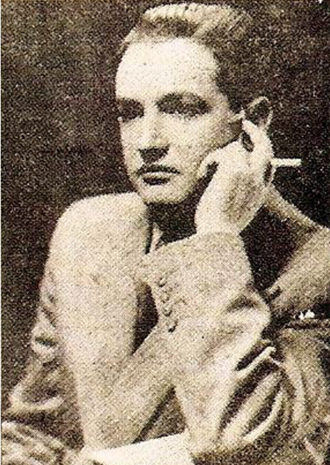
Jorge Icaza Coronel (Quito, 1906 – Quito, 1978) was an Ecuadorian novelist who wrote in Spanish and became one of the leading figures of Latin American indigenista fiction in the 1930s. His work brought into view the exploitation of Ecuador's Indigenous population in the Andes, a subject that was rarely addressed in the national literature of the time.
His father died when he was three, and part of his childhood was spent on an estate in Chimborazo province owned by an uncle on his mother's side, where he saw rural poverty at close range. He studied in Quito and began a medical degree but left it unfinished. He worked as an actor, travelled widely in the country and then turned to writing plays. His first collection of stories, Barro de la sierra, appeared in 1933. The following year he published Huasipungo, the novel that made him internationally known.
His style blends harsh realism with social protest. His central concern is the subjugation of Indigenous laborers by landowners who enjoyed the backing of civil and church authorities, along with the plight of people caught between white and Indigenous worlds. Alongside his fiction he held cultural and diplomatic posts and directed the national library in Quito. Huasipungo was revised in 1953 and 1960, and its influence on Ecuadorian writing about Indigenous life has lasted.
Key works
- Huasipungo (1934): a protest novel about the bonded servitude of Indigenous workers on an Andean estate.
- En las calles (1935): an uprooted Indigenous man in the city, whose protests never reach those in power.
- Cholos (1938): the transformation of an Andean peasant into a bourgeois and a study of the characters' inner lives.
- El chulla Romero y Flores (1958): a young man caught between the white and Indigenous worlds, rejected by both.
Where to start
Huasipungo is Icaza's most representative novel and the ideal entry point. It portrays with raw honesty the exploitation of Indigenous people on Andean haciendas, where they work in exchange for a small plot of land. It is direct, intense and easy to follow, showing the social denunciation typical of Latin American indigenista fiction.
Next: El chulla Romero y Flores. El chulla Romero y Flores broadens Icaza's gaze toward urban mestizo society in Quito and is considered one of his most important works.
Works in Filopedia
Curiosities
A novel in dozens of languages
Huasipungo has been translated into more than forty languages, making it the author's best-known work. Fragments appeared in English in Russia before the first complete English translation was published.
Prizes in Argentina and Ecuador
In 1934 Huasipungo won a prize from the magazine América in Buenos Aires. The following year Icaza received Ecuador's National Literature Prize for the novel En las calles.
Original Filopedia text based on Wikipedia (es) and Wikipedia (en) and Wikidata.