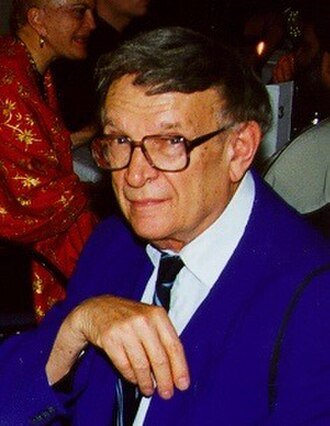
John Hospers
1918–2011 · American philosopher and theorist of libertarianism
John Hospers (Pella, 1918 - Los Angeles, 2011) was an American philosopher working in the analytic tradition, best known for defending libertarianism and for his work in aesthetics and ethics. His importance lies in giving theoretical shape to libertarian thought in the second half of the twentieth century.
After studying in Iowa and at Columbia University, he taught philosophy at several institutions, including Brooklyn College and California State University, Los Angeles, and later became professor emeritus at the University of Southern California. His best-known books include Human Conduct, an ethics textbook that separates psychological egoism from ethical egoism, and Libertarianism: A Political Philosophy for Tomorrow (1971), which set out libertarian political and economic philosophy.
His political career reached a high point in 1972, when he became the Libertarian Party's first presidential candidate, with Tonie Nathan as his running mate. They received one electoral vote from a faithless elector, making Nathan the first woman to receive an electoral vote in a U.S. presidential election. Hospers had earlier been a close intellectual companion of Ayn Rand, but the friendship ended after a critique he made of her work. He later moved toward the Republican Party.
Key ideas
- Psychological and ethical egoism: he distinguishes between describing how people actually act and the normative claim about how they ought to act.
- Libertarianism: he holds that each individual has a right not to be initiated against, and that the state should be limited to protecting that right.
- Aesthetics: he approaches art through the meaning and truth of artworks, a theme of his early work.
Curiosities
An unexpected electoral vote
In 1972 he received an electoral vote from Roger MacBride, a Republican from Virginia who acted as a faithless elector.
Friendship and break with Ayn Rand
He met Rand after she spoke at Brooklyn College. The friendship ended after he criticized one of her lectures at Harvard.
Original Filopedia text based on Wikipedia (es) and Wikipedia (en) and Wikidata.