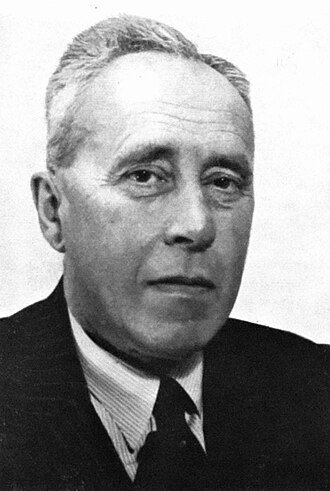
Johan Huizinga
1872–1945 · Dutch historian and philosopher, one of the founders of modern cultural history
Johan Huizinga (Groningen, 1872 – De Steeg, 1945) was a Dutch historian and philosopher, and one of the founders of modern cultural history. His work spans the late nineteenth and the first half of the twentieth century, and it still matters because he proposed studying the past not only as a sequence of political events but as an inquiry into the ways of life, beliefs and sensibilities of each age.
The son of Dirk Huizinga, a professor of physiology, and Jacoba Tonkens, who died when he was only two, he began by studying Indo-European languages and came to command Sanskrit well. His 1897 doctoral thesis dealt with the role of the jester in Indian drama. Around 1902 his interest shifted to the Middle Ages and the Renaissance. He taught at Haarlem and Amsterdam, became professor of history at Groningen in 1905, and held the chair of general history at Leiden from 1915 until 1942. In 1916 he joined the Royal Netherlands Academy of Arts and Sciences.
His best-known book, The Autumn of the Middle Ages (1919), portrays the late medieval splendour of the Burgundian court as a world in decline, giving way to the Renaissance. Huizinga paid close attention to the ideas, feelings, images and forms of life of the period, and to the way each society idealises itself. The book also examines courtly love. Its almost poetic prose is as important as its method, and it is regarded as a pioneer of the history of mentalities. His study of Erasmus (1924) showed his lasting interest in humanist culture.
In Homo Ludens (1938) he took his most original step. He argued that play is not merely a biological or psychological trait but a human function as essential as reflection or work, and that much of culture arises and develops in the form of play. From this he questioned the familiar images of humanity as homo sapiens or homo faber.
Alarmed by the rise of National Socialism, he wrote works of cultural criticism, among them In the Shadows of Tomorrow (1935). He argued that the spirit of technical and mechanical organisation had replaced spontaneous, organic order in both cultural and political life, a diagnosis close to those of Ortega y Gasset and Oswald Spengler.
During the German occupation he spoke openly against the occupiers. In 1942 the Nazis detained him and, after his release, banned him from returning to Leiden. He lived at the home of his colleague Rudolph Cleveringa in De Steeg, and died a few weeks before the end of Nazi rule.
His influence endures in cultural history and in the study of play, which still tends to engage with Homo Ludens. Today his name is attached to the Huizinga Lecture, a prestigious annual lecture in the Netherlands on cultural history and philosophy.
Key ideas
- Play as a foundation of culture: play is an essential, free and creative human function, not a mere biological or psychological residue.
- History of mentalities: the past should be studied through the ideas, emotions and images each era holds of itself.
- Critique of technical culture: mechanical organisation has replaced spontaneous, organic order in cultural and political life.
Works in Filopedia
- Homo Ludens 1938
Books to read
- Herfsttij der Middeleeuwen Studie over levens- en gedachtervormen der veertiende en vijftiende eeuw in Frankrijk en de Nederlanden DutchEPUB 536 KBRead online
- Erasmus and the Age of Reformation EnglishEPUB 342 KBRead online
Curiosities
A novelist in the family
His son Leonhard Huizinga became a writer and published tongue-in-cheek novels about the aristocratic twins Adriaan and Olivier.
An open archive
His archive and papers are held by the Leiden University Libraries, which have published a complete inventory.
Teachers and influences
Influenced by
- Georg Simmel 1858–1918
Original Filopedia text based on Wikipedia (es) and Wikipedia (en) and Wikidata.