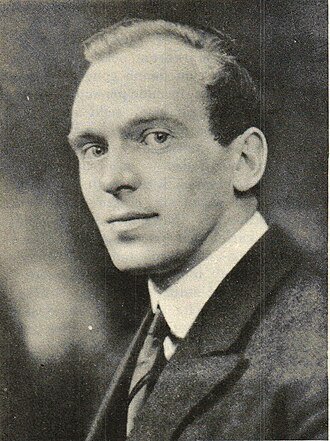
Frans G. Bengtsson
1894–1954 · Swedish poet, novelist and essayist
Frans Gunnar Bengtsson (1894-1954) was a Swedish poet, novelist, essayist and translator who wrote in Swedish. Although he is remembered today mainly for a Viking adventure novel, his career covered several genres and he was active across much of the first half of the twentieth century.
He began as a poet with Tärningkast (Throwing Dice) in 1923. He then turned increasingly to the essay, where his wide knowledge of history and literature met a clear, polished style. He was drawn to men of action and wrote about figures such as Cromwell, Charles XII, Napoleon and General Lee. He also translated Thoreau's Walden and Milton's Paradise Lost into Swedish.
He studied at the University of Lund, where he earned a licentiate in English literature in 1930, though much of his time there went to poetry and chess. He played well enough to represent Sweden at the 1916 Nordic Chess Championship in Copenhagen. He married Gerda Fineman in 1939, and the couple had a son.
His best-known book is The Long Ships, published in two parts in 1941 and 1945. It follows a boy kidnapped onto a raiding ship, who becomes a warrior around the year 1000 in the Mediterranean and later sets out eastward. Many Swedes regard it as one of the finest novels written in their language. During the Nazi occupation of Norway he refused to allow a Norwegian publisher to issue it with cuts.
His legacy lives on in Sweden. A chess tournament in Lund has borne his name since 1967, and a postage stamp with his likeness was issued in 1994. It is often said that his novel gave its name to the wireless technology Bluetooth.
Key works
- Tärningkast (1923): his poetic debut, which first brought him attention as a poet.
- Litteratörer och militärer (1929): his first essay collection, on writers and soldiers.
- The Long Ships (Röde Orm, 1941 and 1945): a Viking novel in two parts about a boy who becomes a warrior.
Curiosities
Competitive chess
Besides writing, he was a chess player of good standing. He represented Sweden at the 1916 Nordic Chess Championship in Copenhagen.
A letter against censorship
When a Norwegian publisher wanted to print The Long Ships with cuts during the occupation, Bengtsson replied in writing that not a comma or a Jew would be removed without his consent.
A technological name
His novel inspired the name of the wireless technology Bluetooth.
Original Filopedia text based on Wikipedia (es) and Wikipedia (en) and Wikidata.