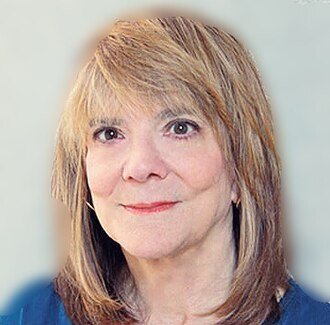
Elizabeth Loftus
b. 1944 · American psychologist known for research on memory and false memories
Elizabeth Loftus (born in Los Angeles in 1944) is an American psychologist whose work has reshaped how we understand the reliability of human memory. She is best known for the misinformation effect, the finding that details learned after an event can change what a person remembers of it, and for her research on false memories. A cognitive psychologist, she has spent much of her career at the University of California, Irvine.
She grew up in a Jewish family in Bel Air, Los Angeles. Her mother drowned when Loftus was fourteen, and the loss sparked her interest in memory: a relative once told her she had been the first to see the body, and she began to recall small details of the scene, until it became clear that one of her aunts had found it. She earned a degree in mathematics and psychology at UCLA in 1966 and a PhD in mathematical psychology at Stanford in 1970. She worked at the University of Washington from 1973 to 2001 before moving to Irvine.
Her first major experiment showed students videos of car crashes and then asked how fast the cars were going. Depending on whether the question used the word "collided" or "smashed," the estimates rose, suggesting that a single word could shape what was remembered. In later work, participants came to believe they had been lost in a shopping mall as children, after hearing invented accounts from relatives. These studies led her to challenge the idea that memory works like a fixed archive that is simply retrieved intact.
From the early 1990s Loftus testified as an expert witness in more than three hundred court cases, often for defendants accused of serious crimes, which brought sharp criticism. Her role in the Jane Doe case and her caution about recovered memories in therapy set her against many groups and professionals. Even so, she received honours such as the Gold Medal for Lifetime Achievement from the American Psychological Foundation.
Her influence reaches into criminal law, where her work has encouraged closer scrutiny of eyewitness testimony, and into the psychology of memory, with more than twenty books and roughly five hundred scientific articles.
Key ideas
- Misinformation effect: information received after an event can alter what a person remembers of it.
- False memories: the mind can construct memories of experiences that never happened, based on suggestion or other people's accounts.
- Reconstructive memory: remembering is not replaying a recording but rebuilding the past each time, which makes memory open to outside influence.
- Reliability of testimony: witnesses can feel certain of their account and still be wrong, so the way questions are asked matters.
- Caution about recovered memories: memories of abuse recovered in therapy call for care, since suggestion can produce mistaken recollections.
Curiosities
The memory of her mother
After her mother's death, Loftus began to recall details of the scene after a relative told her she had been the first to see the body. It was later established that one of her aunts had found it.
The shopping mall walks
In one of her experiments, some participants came to believe they had been lost in a shopping mall as children, an event that had never taken place.
Original Filopedia text based on Wikipedia (es) and Wikipedia (en) and Wikidata.