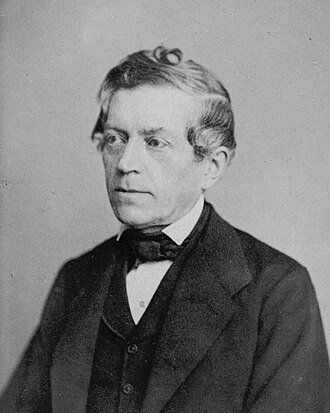
David Strauss
1808–1874 · German theologian and philosopher, critic of the historical Jesus
David Friedrich Strauss (Ludwigsburg, 1808 - 1874) was a German theologian and philosopher, a disciple of Hegel and Ferdinand Christian Baur. He is a key figure in the historical study of Jesus. His work stands between late German rationalism and modern biblical criticism, which is why he still appears in any history of Gospel scholarship.
He studied at the evangelical seminary in Blaubeuren and at the Tübinger Stift, where he was drawn to Schelling, Schleiermacher and, above all, Hegel. After a spell teaching Latin, history and Hebrew, he went to Berlin, only to find that Hegel had just died. In 1835-1836 he published Das Leben Jesu, kritisch bearbeitet, his major work, which brought him immediate fame and fierce controversy.
In that book he argued that the Gospels contain mythical narratives. By myth he did not mean deliberate lies, but a pre-scientific way of expressing religious ideas. Miracles, in his view, were additions made by the early community to present Jesus as the Messiah foretold by the prophets. His position differed from rationalists, who explained miracles as misunderstandings, and from supernaturalists, who took them literally. He considered John the most mythologised Gospel and no longer reliable as a historical source.
After the storm he left theology for more than twenty years and turned to biographies. He returned in 1862 with a study of Reimarus, followed by The Life of Jesus for the German People (1864) and The Christ of Faith and the Jesus of History (1865), a critique of Schleiermacher's lectures. His influence was considerable: he helped establish the distinction between the historical Jesus and the Christ of faith, and anticipated much later biblical criticism.
Key ideas
- Myth: a narrative that expresses religious truth in imaginative form, not a deliberate fabrication.
- Miracles: episodes added by the early community to present Jesus as the Messiah.
- Critique of John: the most mythologised Gospel, and therefore unreliable as a source for the historical Jesus.
- History of doctrine: the history of Christian dogma is largely the history of its disintegration.
Books to read
- The Life of Jesus Critically Examined (4th ed.) EnglishEPUB 1,7 MBRead online
Curiosities
A pension refused
His appointment as professor of theology in Zurich provoked such controversy that the authorities decided to pension him off before he began. Effigies of him were burnt during the city's Shrove Tuesday festival, and he gave the pension of 1000 Swiss francs a year to the poor.
A famous translation
His Life of Jesus was translated into English by George Eliot (Marian Evans) and published in London in 1846, in three volumes.
Original Filopedia text based on Wikipedia (es) and Wikipedia (en) and Wikidata.