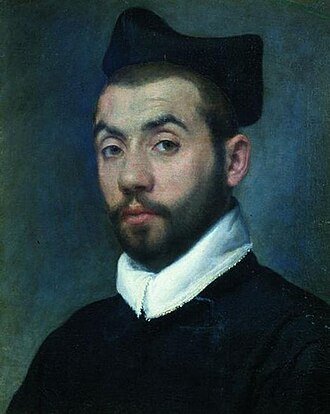
Clément Marot
1495–1544 · French Renaissance poet
Clément Marot (Cahors, 1496 – Turin, 1544) was one of the leading poets at the court of Francis I of France. Writing in Middle French, he moved from the stylised rhetoric of the late fifteenth century toward a more personal court poetry, satire and religious verse that paved the way for the Pléiade. He is remembered for renewing French verse and for his translations of the Psalms, which Protestant congregations sang for centuries.
The son of Jean Marot, a poet who served as official writer to Queen Anne of Brittany, he grew up among the rhétoriqueurs, with their fondness for fixed forms such as the ballade and rondeau. He briefly studied law before becoming a page in the household of Nicolas de Neufville, lord of Villeroy, which opened the doors of court life. After presenting his verse to the young King Francis I, he joined the circle of the king's sister, Marguerite of Alençon, later Marguerite of Navarre, a generous patron of the arts. He followed the king on campaigns and wrote about the Field of the Cloth of Gold and the horrors of war.
Around 1525 his style became plainer. His trouble began as the court hardened against reformist ideas. He was jailed for heresy in 1526 and, after his release, wrote L'Enfer, a bitter satirical poem that his friend Étienne Dolet later imitated. After another arrest in 1531, for trying to free a prisoner, he appealed to the king in a poem that became famous. In 1532 he published the first collection of his works, the Adolescence clémentine, which was widely read and reprinted.
Political and religious pressure sent him into exile, first at Nérac and then at Ferrara, where Duchess Renée, a Reform sympathiser, gave him refuge. There he refined the blason, a descriptive poem that inspired many French imitators. After the Affair of the Placards in 1534 he returned to France, publicly abjured at Lyon and regained royal favour. His psalm translations, begun in the early 1540s, were sung at court and in the city, and are often credited with spreading Protestant ideas in France, though that influence is probably exaggerated.
In his last years the Sorbonne opposed vernacular Bible translations, and royal protection was no longer enough. He withdrew to Geneva, then to Piedmont, and died in Turin in 1544. His legacy lies in Renaissance French verse, satirical poetry and Protestant hymnody, and his light, sharp style is still read as a precursor of modern French poetry.
Key works
- L'Adolescence clémentine (1532): a collection of his early poems, varied in form and subject.
- Épîtres (1520-1538): verse epistles to the king and friends, mixing humour and appeal.
- Les Psaumes (1541): verse translation of the Psalms of David, sung for centuries by Protestant congregations.
- L'Enfer (1526): a satirical, anticlerical poem, published in several editions.
- Épigrammes: short, witty satirical poems.
Curiosities
A mouse and a lion
In the verse letter written after his imprisonment, he promised to repay his friend's help, like the mouse in Aesop's fable does for the lion, despite his limited power.
A reply through a fictional servant
To answer Sagon, a poet of little worth, he wrote an epistle under the name of a fictitious servant, Frippelipes, which let him be blunter without stooping to argue directly.
Original Filopedia text based on Wikipedia (es) and Wikipedia (en) and Wikidata.