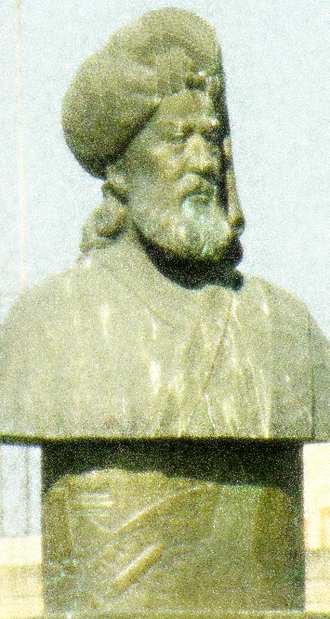
Bozorgmehr
450–501 · Sasanian sage and dignitary, minister and military commander
Bozorgmehr-e Bokhtagan was a sage and senior dignitary from the Karen family, one of the Seven Great Houses of Iran, who served at the Sasanian court in the sixth century. He matters because Persian and Arabic sources remember him as a model of prudent counsel, so much so that his name came to stand for political wisdom, and he appears in key works of Persian literature such as the Shahnameh.
He served as minister (wuzurg framadār) to Kavad I from 498 and kept the post under Kavad's son, Khosrow I. According to the sources, he persuaded Kavad to stop taxing the fruit and grain of the peasantry. Later he became military commander (spahbed) of Khorasan, a post he held under Khosrow I and Hormizd IV. His two seals present him as a Parthian aspbed, a way of stressing his ancestry. According to Ferdinand Justi, he was executed on the orders of Hormizd IV, though later tradition preserves a version in which the king pardoned him, and scholars do not agree on these details.
He wrote several treatises in Middle Persian, the best known being the Wizārišn ī čatrang, a treatise on chess. His influence reached medieval Persian and Arabic literature, where his name became linked with the prudence of royal advisers.
Key ideas
- Prudent counsel: his reputation rests on advising kings with moderation, an ideal of statecraft the sources credit to him.
- Fiscal fairness: according to the sources, he proposed easing the taxes that weighed on agricultural produce and the peasants who grew it.
- Learning in written form: his Middle Persian treatises, such as the one on chess, show an interest in technical knowledge and written reflection.
Curiosities
A disputed identity
The historian Arthur Christensen proposed that Bozorgmehr was the same person as Borzuya, but studies of later Persian literature and linguistic analysis suggest otherwise.
A legendary pardon
Ferdowsi and al-Tha'alibi tell of a king, known for his fairness, who pardoned him, though this account does not match other versions of his death.
Original Filopedia text based on Wikipedia (es) and Wikipedia (en) and Wikidata.