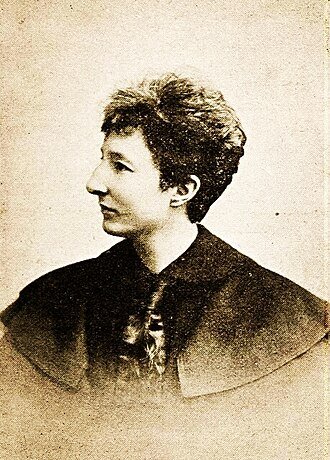
Anita Augspurg
1857–1943 · German jurist, actress and feminist and pacifist activist
Anita Augspurg (Verden an der Aller, 1857 - Zurich, 1943) was a German jurist, actress, writer and activist in the radical feminist and pacifist movements. She matters because she tied the fight for women's suffrage to opposition to war, and because she was one of the first women to earn a law doctorate in the German Empire.
The daughter of a lawyer, she worked in her father's office as a teenager and later trained as a teacher and in acting. From 1881 to 1882 she was an apprentice with the Meiningen Ensemble. An inheritance from her maternal grandmother gave her financial independence, and in 1887 she opened a photography studio in Munich, the Hofatelier Elvira, with her friend Sophia Goudstikker. Their unconventional lifestyle exposed her to personal attacks from anti-feminists more than most figures in the movement.
By around 1890 she was a public speaker, and she decided to study law in Zurich, since German women still lacked full access to universities. She earned her doctorate in 1897. Even so, she could not practise until the Weimar Constitution's equality provisions took effect in 1922.
From 1895 she wrote for the journal Die Frauenbewegung, denouncing the legal discrimination women faced. In 1905 she published a controversial open letter calling for a "free marriage" outside state-approved marriage, which caused a major outcry. With Lida Gustava Heymann, her partner for life, she worked for women's suffrage in Hamburg and Bavaria, and during the war the two held clandestine meetings in their Munich apartment.
After the Weimar Republic was proclaimed she sat on Bavaria's provisional Landtag. Opposing the rising Nazis, she did not return to Germany from a winter trip in 1933, and the Nazis seized her property. After exile in Switzerland and a period in South America, she settled in Zurich, where she died a few months after Heymann. Her legacy is linked above all to the idea that feminism and pacifism belong together.
Key works
- Ueber die Entstehung und Praxis der Volksvertretung in England (1898): her doctoral dissertation in Zurich on parliamentary representation in England.
- Erlebtes, Erschautes. Deutsche Frauen kämpfen für Freiheit, Recht und Frieden (1992): a memoir written with Lida Gustava Heymann and published posthumously.
- Open letter on "free marriage" (1905): a controversial appeal to reform the patriarchal marriage law.
Curiosities
A pioneer with qualifications
She is often described as Germany's first woman lawyer, but other women had earned law doctorates before her, so that claim is inaccurate.
A studio with royal clients
The Hofatelier Elvira she opened in Munich in 1887 eventually counted the Bavarian royal family among its customers.
A petition against Hitler
In 1923 she and Heymann asked the Bavarian Interior Minister to expel the Austrian Adolf Hitler on grounds of sedition. Sources identify this as a significant factor in their later situation.
Original Filopedia text based on Wikipedia (es) and Wikipedia (en) and Wikidata.